
Pardon Our French:
New Website Translation Pilot
Posted on November 23, 2026
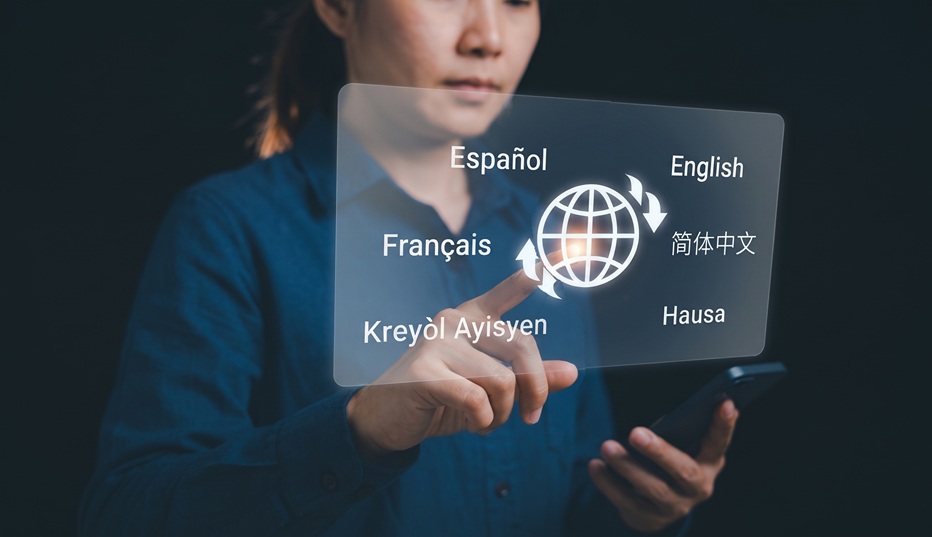
A select group of Delaware state agencies has now gone live with a new, integrated website language translation engine.
The Government Information Center (GIC) is sponsoring this pilot program to gauge the accuracy and effectiveness of the software, with an eye toward potentially expanding the program if all goes well. While machine translation has come a long way, it’s still not a perfect science. We’re hoping to enlist your help to get some useful feedback on the program!
How it’s Used
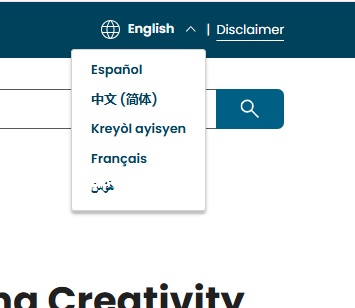
In a nutshell, the software adds a dropdown menu to the site’s header that allows users to choose one of five languages, not including English. When a language is selected, the entire website will be translated to that language for the duration of the user’s visit.
How We Chose the Languages
While our pilot is not tied to an active mandate, we modeled its framework on the concepts outlined in Delaware House Bill 302, which proposed expanding language access across state government websites based on population data.
Using U.S. Census data, we identified the top five non-English languages spoken in Delaware.
Turning Census data into a practical web tool required a few thoughtful judgment calls—because the Census groups several dialects and regional languages under broad umbrellas (such as “Chinese” or “Western African”), our team had to select specific, widely understood written languages to represent those categories.
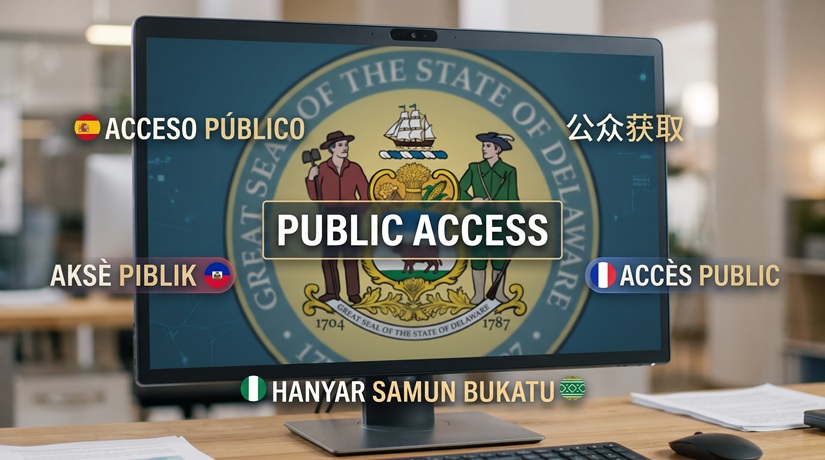
The final five languages for this pilot are: Spanish, Simplified Chinese, Haitian Creole, French, and Hausa.
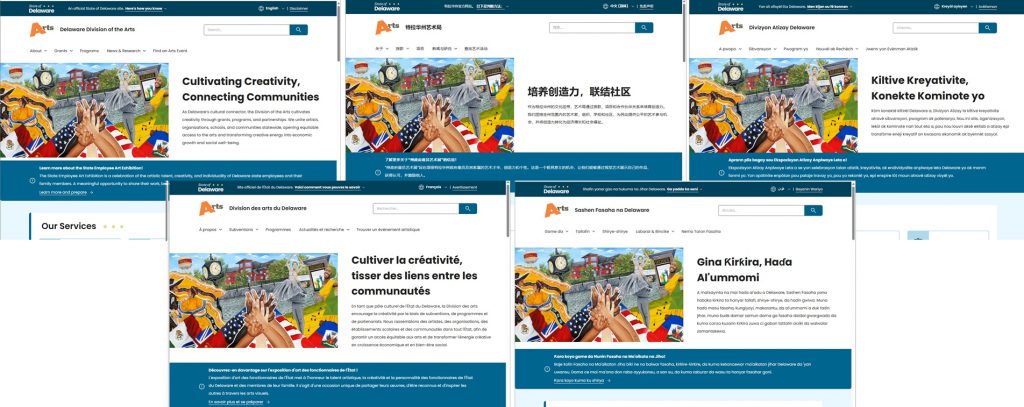
As we gather data and feedback during the pilot, we expect to refine and adjust this language list over time.
What translation software is being used?
Our pilot program is using Weglot, which is an AI-powered website translation tool that integrates directly into WordPress.
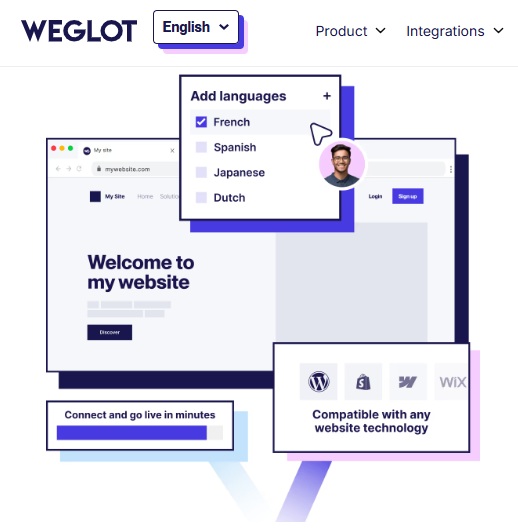
Unlike basic browser extensions that only offer temporary on-screen translations, Weglot automatically detects and translates website content, menus, and metadata, giving visitors a multilingual experience that’s built directly into the page. Its AI capabilities are intended to help enhance the context of expressions and phrases that can be confusing when translated literally.
Behind the Integration
One of the biggest advantages of the software is how lightweight and straightforward it is to deploy on our existing infrastructure:
- Simple Setup: Each participating site is configured in the Weglot dashboard, which generates a unique API key. Our development team simply activates the Weglot WordPress plugin on the site and enters that key.
- Intuitive Placement: Once active, a language dropdown menu automatically appears in the top-right corner of the blue State of Delaware Lighthouse header.
Our UX team chose this conventional placement so visitors can find it immediately, while keeping the header layout scalable for future Lighthouse sites. - Built-In Analytics: Behind the scenes, the Weglot dashboard tracks translation volume—including total words and characters translated—helping our team monitor usage and performance.
- Looking Ahead to CLF4: While this initial rollout is tailored for Lighthouse WordPress sites, our developers are also working on a backwards-compatible solution for legacy CLF4 websites.
Where You Can Try It Now
Because this initiative is currently funded as a targeted pilot rather than a statewide rollout, we are testing it on a handful of agency websites first:
If the pilot generates strong engagement and positive results, we hope to secure support to expand the tool to additional state agencies in the future.
Help Us Improve: Multilingual Reviewers Wanted
Machine translation has come a long way, and Weglot allows our team to manually refine specific terms and phrases over time. However, automated translations aren’t always perfect—which is why every translated page carries a clear disclaimer noting that the English version remains the official text of record.
To make these translations as accurate and natural as possible for Delaware residents, we need your help. If you are multilingual and want to help review translated content on our pilot sites, please reach out to the GIC team and let us know which language you’d like to evaluate.
Your feedback will directly shape how we improve digital language access across the state!
Stay Updated
Receive the latest news from the GIC.