
New AI Tool to Manage Your PDFs!
Posted on May 27, 2026
Seeking Volunteers for an Exciting New Pilot Program
If you’ve ever wondered, “How many PDFs does my agency actually have online—and what do we do with them?”—this is your chance to find out.
One of the biggest challenges facing government agencies is the overwhelming number of legacy PDF files on their websites. Inaccessible documents that were originally created to be posted on office bulletin boards now litter the world of civic tech.
The biggest question is often knowing where to begin.

Before you can effectively address your PDFs, you need to understand the scope of the problem. That’s exactly what an exciting new AI pilot program available to all Delaware state agencies is designed to do.
The GIC development team has “forked” an open-source library provided by the nonprofit Code for America to create the CountPDF tool for Delaware state agencies. Because it is built using open-source technology, this tool helps agencies quickly inventory, analyze, and make informed decisions about their PDF content at no additional cost to your agency budget.
What You Can Do with the ASAP Tool
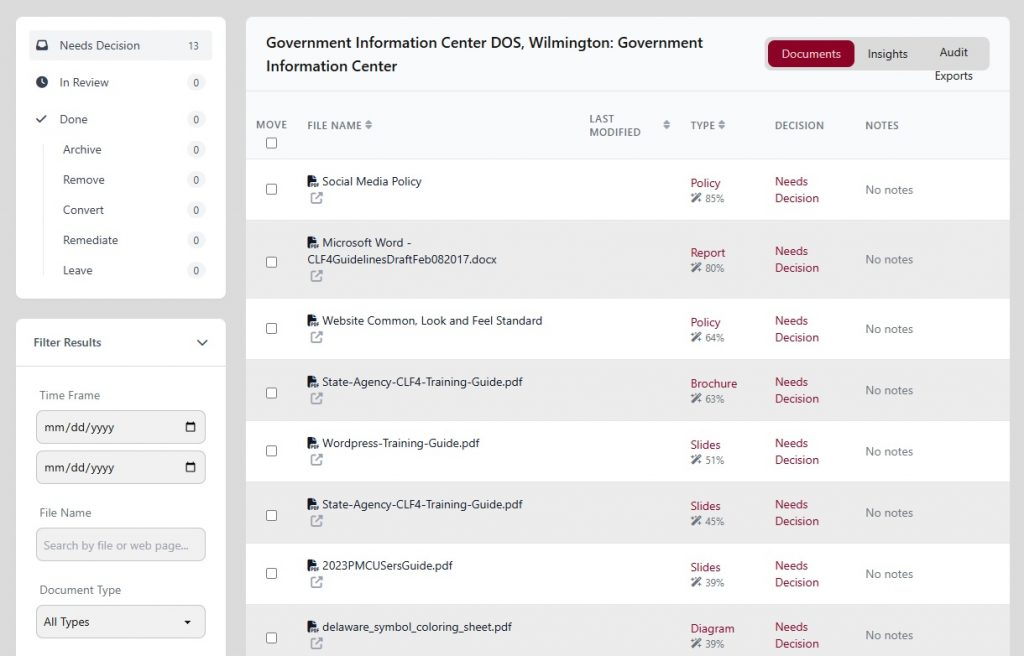
With a simple domain scan, agencies can:
- Count and inventory all PDFs on a website
- Identify document types across large collections
- Understand document age and relevance
- Prioritize accessibility efforts based on real data
It’s important to note that CountPDF is not a remediation tool—it’s a strategic decision-making tool. It gives teams the complete visibility they need to plan smarter, reduce compliance risk, and focus valuable resources where they matter most.
How AI Simplifies the Process
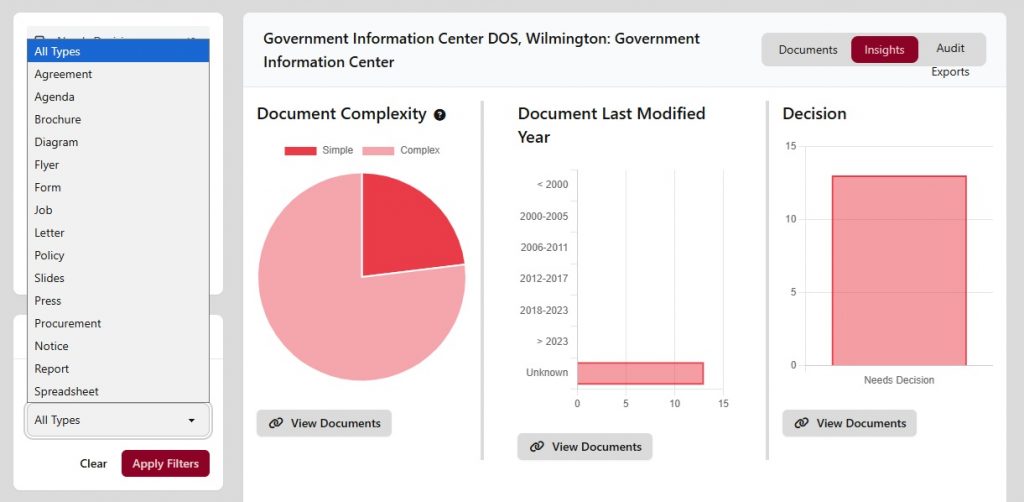
One of the most powerful aspects of the CountPDF tool is its built-in AI capabilities. With just a click, users can:
- Automatically categorize documents (forms, reports, policies, slides, and more)
- Generate quick summaries of PDF content
- Run an exception check to identify documents that may not need remediation and could be archived instead
These automated features dramatically reduce manual review time and help agency teams move from guesswork to strategy.
You can also read more about the approach here:
Code for America’s AI solution to PDF challenges.
Making Content Decisions
Once CountPDF generates your agency’s inventory, you can use the data to execute immediate, practical improvements to your web presence:
- Archive Legacy Content: Identify outdated or irrelevant PDFs that are no longer needed by the public and safely remove them from your active site, instantly reducing your digital footprint and compliance risks.
- Migrate to True Digital Forms: Spot fillable PDF forms are highly utilized, but inherently inaccessible. You can prioritize these files to be migrated into true, web-native digital forms, improving the user experience for Delaware residents on multiple platforms.
- Streamline Remediation: Group high-priority policies and reports by complexity, allowing your web editors to tackle accessibility updates based on real organizational value rather than random selection.
Seeking State Agency Volunteers
The pilot program is open to any Delaware state agency, whether or not your current website is hosted directly on the GIC platform.
We are actively looking for agency volunteers to step forward and get started with us today.
There is no cost for Delaware state agencies to participate in this program. The GIC is also handling the infrastructure and setup, making it easy to get started without procurement barriers.
How to Join the Pilot Program
Getting started is simple. The GIC will set up your domain for scanning, create user accounts for your team, and help you begin exploring your results.
To request access, submit a request through the GIC web maintenance request form and include:
- The domain you’d like to scan
- A list of users who should have access
This pilot program is about more than counting PDFs—it’s about giving agencies the clarity and tools they need to take meaningful next steps toward accessibility and content management.
Learn More
For those who want to dive deeper into the background of this solution and see how other states are approaching the problem, check out these excellent resources:
Stay Updated
Receive the latest news from the GIC.